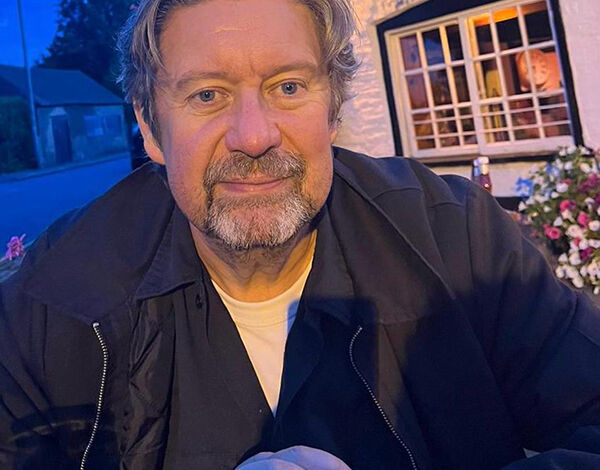
A young teenager in the late 70’s I grew up on one of the large council estates that crowded in on Millwall FC. One of my earliest memories is hearing a loud roar reverberate around the tower blocks and asking my dad ‘what’s that?’ He replied in his thick Dublin accent, ‘That’s Millwall scoring… You don’t hear it much.’ At 16 I left school without any qualifications but somehow managed to blag my way into a job at Barclays Bank making tea and licking envelopes. When they caught up with my lack of qualifications they must have liked my tea because rather than sack me they made me enrol in Night school where I got the requisite four ‘O’ Levels including English Language and English Literature. From there I went on to have a mediocre career of long hours that paid the bills.
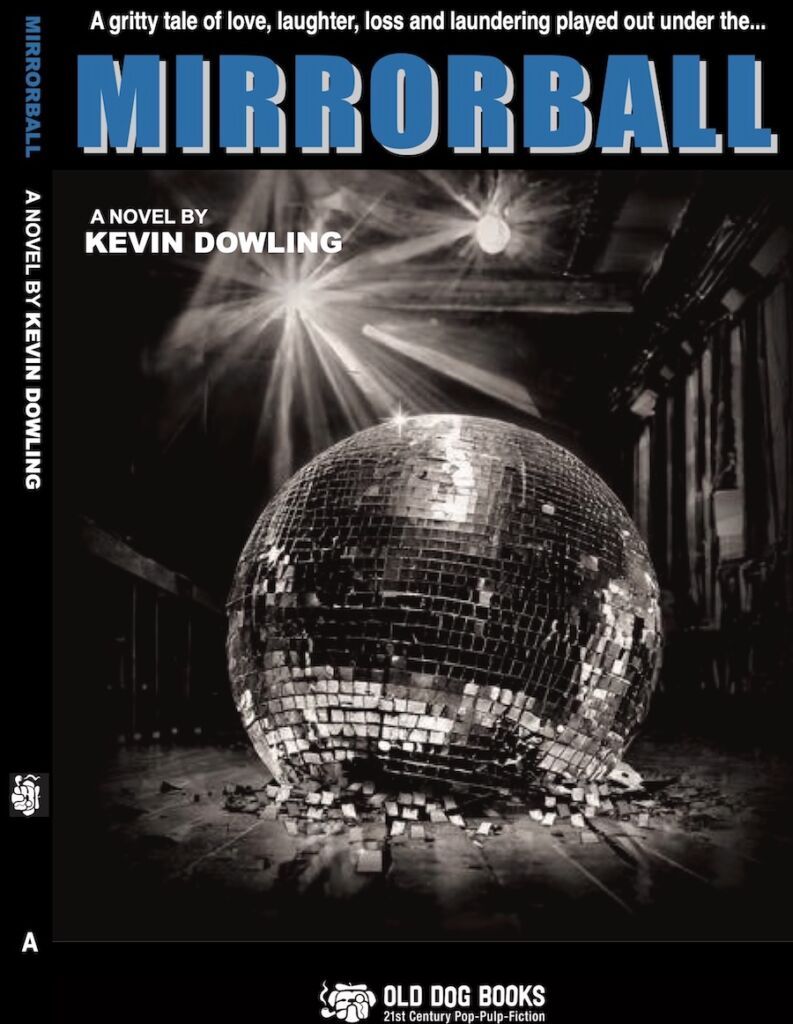
Ultimately I’m one of life’s worriers; a catastrophist. So I write; I create an alternative world where worry can’t follow me. Mirrorball is my first novel. I’ve always been drawn to the antihero. The kind of character who stumbles through the shadows yet somehow you root for. My aim is simple: to make readers laugh out loud and shed a tear as Ciarán navigates the darkly comic rites of passage that shape him. Set in the early eighties, Mirrorball moves through the tightknit world of South East London’s Irish community. The story unfolds far from London on a small cabbage farm near Perugia before flashing back three years to a life lived under the glittering scrutiny of a mirrorball, reflecting Ciarán’s every thought, deed and mistake. A life of laughter, family, friendship and love, plus a few shady characters to navigate and a little money laundering. These two worlds collide as exiled Ciarán returns to reclaim his life. I’ve agonised over its genre. It’s difficult to categorise. It’s a rites of passage, part crime but mainly a comedy wrapped around a love story. It’s by no means a romantic comedy; it’s just too gritty for that. Ciarán’s story does not end with Mirrorball, I’m working on the sequel. I see a trilogy, The Chronicles of Deptford.
01. How did you get started in the world of words?
Probably not the direction you expected me to go here but … at the age of ten I was unable to read. So I was placed in a remedial class with all the stigma that comes with being a dunce. My teacher Mrs Bishop was ancient and looked like Margaret Thatcher but sterner. So different from the young Led Zeppelin wannabe teachers that haunted the main school.
She terrified me into reading. She’d stand over me with a ruler as I read aloud from the colourful children’s pirate series, The Griffin Pirate Stories. When she finally returned me to the Led Zeppelin wannabees, she gave me a copy of Robert Louis Stevenson’s Treasure Island. ‘Pirates for readers’ she said. It was the first “real” book I ever read.
Mirrorball is dedicated to Mrs Bishop.

02. Has it been a struggle getting your first book published?
Breaking through is brutally difficult. I sent manuscripts to numerous literary agents. They didn’t even send a rejection letter. Agents want proof you already have media attention. Fine if you’ve just been on reality TV or are a celebrity chef but it leaves the rest of us adrift.
Fortunately I was introduced to Paul Hallam at Old Dog Books. We went for a beer and I pitched Mirrorball to him. Paul took the manuscript away with him and fortunately he loved it. Old Dog Books took it from there, producing if I say so myself, a high quality paperback.
03. Where did you see the first piece you had written in print, how did that feel?
Six large boxes arrived on the door step unexpected. Instead of opening them I went to the pub for a livener. It was a defining moment, so I walked away. What if I didn’t like the finished product? Also I’d so enjoyed the creative journey I didn’t want that to end. Finally my wife Sharon bullied me into opening a box. They looked great. It caught me off guard how emotional it made me. There it was a real physical book in my hands. It was like all those years I’ve been hiding in this parallel universe and now I can show people around. Show them what I’ve been doing there. In that moment I realised it’s real. I wrote it. It’s a real book!
BUY YOUR COPY HERE!04. What was the main reasons that you started to write seriously?
Escapism. I had a job in a bank working impossible hours. I was never very good at maths and daydreaming meant my attention to detail was always just off. So I wrote. Writing gave me a world to escape to. A parallel universe that let me switch off the constant worry of the reality of trying to hold down a stressful job, paying the mortgage and all the routines life throws at you.
05. What’s a typical working day like when you are writing?
I can go weeks without writing a word. I’ve learnt not to force it. On these days, if I do open the laptop it’s usually to torment existing sentences, picking and prodding at already written words.

Then someone tells a funny story down the pub, or I hear a song that triggers a memory (not necessarily mine) and a whole stream of consciousness flows. On these days I start early with a cup of tea and an 80’s indie playlist and I just write. I don’t worry about grammar, spelling or facts, you can’t allow them to get in the way of creative genius! I save corrections for non-creative days.
The dog gets to go on numerous walks whether she likes it or not. These walks extract me from the word crunching and allow me space to just let the story develop in my head, hoping I won’t forget by the time we get back home. I might write a thousand words on a good day. And then spend three weeks agonising over them.
06. What were your younger experiences that helped to shape your later mindset?
Growing up on a sprawling, rundown council estate in South East London was an experience in itself. It was all about the banter. Verbal sparring using sharpened wit. Looking back, it was the perfect apprenticeship for a wordsmith; language was currency, timing, rhythm and delivery was everything. You held your own with nothing but words… until you went too far.
It was a harsh time. Violent. Words came in handy, allowing me to talk my way out of a few precarious situations. To be fair a few I didn’t.
We were a poor community, so we made our own entertainment. I grew up surrounded by brilliant, funny storytellers down the youth club, the football dressing room, the social club, the terraces or the pub. People who could turn a trip to the corner shop into an epic saga. They taught me early on that truth is stranger than fiction — and that you should never let the truth get in the way of a good story.
Mirrorball is essentially a tapestry of other people’s funny anecdotes, stitched together into a patchwork of humour and love set against a harsh backdrop.
07. What was it like to be young and involved in Street Cultures, what were your pointers and outlook?
We’re talking late 70’s into the early 80’s in the tower blocks next to Millwall. Back then you either drifted into football hooliganism, drugs or the record shop. I chose the record shop and with a few likeminded souls used our pocketful of red bus rover tickets to criss-cross London chasing gigs and clubs.
From the local haunts — Lewisham Odeon, Deptford Albany, Woolwich Tramshed — all the way to the Clarendon in Hammersmith or The Dublin castle in Camden and every stickyfloored venue in between. I always had a soft spot for the Lyceum on the Strand, but my heart still belongs to The 100 Club.
We got heavily into the Medway garage scene. We were constantly seeing The Milkshakes, who had that raw, BeatlesinHamburg energy. So many great bands around at that time… The Prisoners and The Playn Jayn come to mind… the latter still the best live band I’ve ever seen.
It wasn’t all gigs and clubs. A lot of it was running away from punks, skinheads and psychobillies. It was a violent tribal era, a time of youth tribes and you needed to understand where you stood with each. I went for an indie post punk look, stealing my dad’s old 60’s jackets.
08. What was that period like for you as a young man outside of the Music world?
I was 16 in 1980. What a decade. My mates had bands, but I couldn’t sing and I couldn’t play. I didn’t mind. I was the watercarrier. That said, while never a musician, I never felt ‘outside of the Music world’. Back then, it wasn’t about talent or status — it was about being there. It was a constant rollercoaster of gigs and discovery. I felt very much part of the Music world.
09. How did the Media distort what was going on with youth culture at that time?
I don’t think it was so much distorted, more just missed the point.
The chase for sensational headlines completely drowned out what was really happening. Newspapers and TV leaned into stories of youth violence and moral decline, feeding the outrage of an older ‘paying’ audience. What the media ignored was the cause of that chaos and the creative effect it would have.
The cause being boredom born from economic collapse, disillusionment, mass unemployment, and widening inequality… exclusion. The effect being the most important cultural revolutions of the era; the rise of DIY music and selfmade culture.
What the mainstream media failed to grasp was that the late 70’s and early 80’s weren’t just chaos or danger, they were defined by creativity under pressure. Young people, shut out of economic opportunity, turned frustration into invention. Built their own DIY cultural spaces. They snatched music and arts from the middleclass, Oxford educated types. Anyone could buy a cheap guitar and jump on stage. They built their own DIY platform out of frustration.
It was a period of intense, selfgenerated creativity which the mainstream media missed completely.
10. What music, films and books helped you to the pathway of all things alternative?
Thursday morning meant the NME. One of only three ways to see who was gigging. The others being word of mouth and the abundance of corrugated iron, that sealed off bomb sites, covered in fly posters. I’d sometimes buy Melody Maker and photocopied Fanzines from record shops that never seemed to make it past issue two.
So many bands and songs. Such a creative era. Following on from the staples like The Sex Pistols, The Jam, The Clash and The Specials, there was a whole second tier of great bands like The Redskins; The Chords; Milkshakes; Playn Jayn; Screaming Blue Messiahs; The Fall; Magazine; Pere Ubu, Wire and early Ultravox (John Foxx). Special mention for Deptford Fun City, the short lived punk/newwave record label which promoted emerging Deptford bands, meaning Squeeze and Alternative TV had a huge impact on me. I still love the light blue LP centre label of Deptford High St.
Favourite songs… PIL’s Death Disco. I Roy’s Don’t Touch I Man Dread. Costello’s Watching The Detectives. Magazine’s Shot By Both Sides and Psychedelic Furs We Love you. Ask me next week and it will be different.
Films never featured heavily for me. I don’t think it was a great era for film. Eraserhead (which still disturbs me), Blue Velvet and The Elephant Man come to mind.
Books would have to be George Orwell especially Animal Farm and Homage to Catalonia. As does Primo Levi’s If Not Now, When? and Jack Kerouac’s On The Road. A bit later came a writer I really relate to; Roddy Doyle and his Barrytown Trilogy. Doyle brought a real workingclass voice – real humour and heart.

11. What other books do you wish you had written?
Treasure Island; published in 1883. With all the modern day distractions it’s still able to capture the imagination. Mario Puzo’s The Godfather, more than a gangster book, It’s about family; it just feels so real. Roddy Doyles’ A Star Called Henry, so funny yet so gritty.
12. How has the internet changed what you do?
The internet hasn’t changed what I do but it has both a positive and negative influence.
Writing with nostalgia is a balancing act. Authentic detail matters; was that song even out then and could you genuinely buy a Wagon Wheel from the sweetshop back then? Is Wagon Wheel one word or two? Important questions that need to be answered. Thankfully, the internet lets you check those things in seconds.
The flip side is the internet tempts you into everything except writing. One moment you’re verifying the release date of the B52’s, Give Me Back My Man (1st August 1980), the next you’ve fallen into a shopping spiral and ordered yet another box of Popper Point pencils. A bored writer’s natural predator is the shopping cart top right of your screen. That’s why I try to leave the research (and browsing) for non-creative days.
13. Do you have any advice for wannabe authors?
Just crack on. Write for yourself and write about what you know but don’t be frightened to stray from your lane; just not too far. Don’t write for commercial success. There are very few JK Rowlings.
I think it’s important to roughly know how your story ends then just let the words have their fun getting there. Let them go off-piste. Yes have a framework, but wonder. Some of my favourite paragraphs I’ve written have just come out of left field.
Asking for feedback is like daring someone to tell you your daughter’s ugly at her christening. So find someone who’s both close enough to care and honest enough to tell you those draft pages you gave them to critique are ugly. Finding this person is not easy but so important.
14. What projects are you planning for the future and please feel free to plug your latest book?
Promoting Mirrorball. We had a very successful Book Launch hosted by Garry Bushell and it’s selling well. Intention is to maybe do a couple more book launches. That, and trying to get the book in front of the right people to review/champion. Getting momentum going is a tough gig but I’m from the DIY generation!
We also need to think about a digital copy. For me It will always be about holding the paperback in my hands but I need to move with the times.
I think it would make a great adaptation to screen and would love for one of the streaming services to show interest.
I’m about 23,000 words into the sequel to Mirrorball. Only another 23,000ish to go. I’m hoping to be done for Christmas. I had my first meeting to discuss the art work for the cover last week which makes it feel all very real and exciting.
I’m also working on a novel called Skie but that’s a story for another day.
15. What has been the reaction so far to your first book?
It’s been great. People have been really supportive and reviews have been very positive. We just need to get it to a bigger audience.
BUY YOUR COPY HERE!