Acme Boy By Phil Strongman review by Jay Strongman
A Superb New Book about Boy and the London Pre-Punk/Punk Era
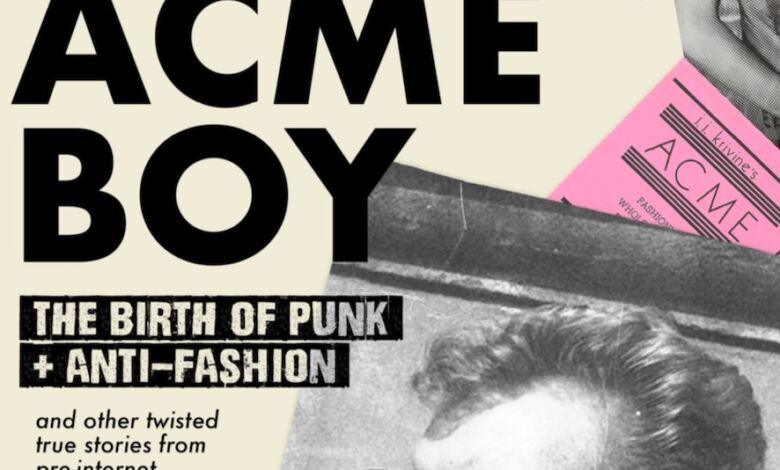
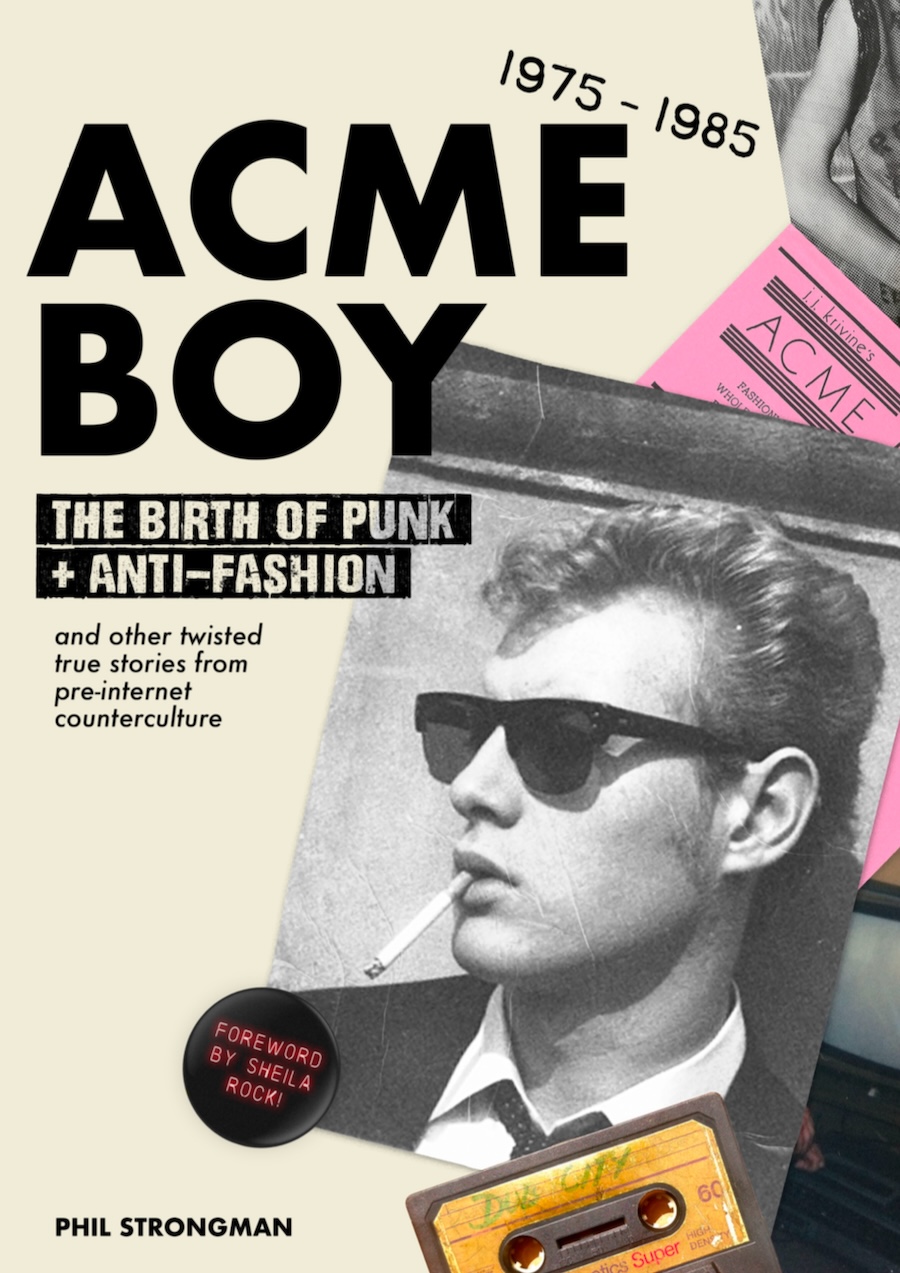
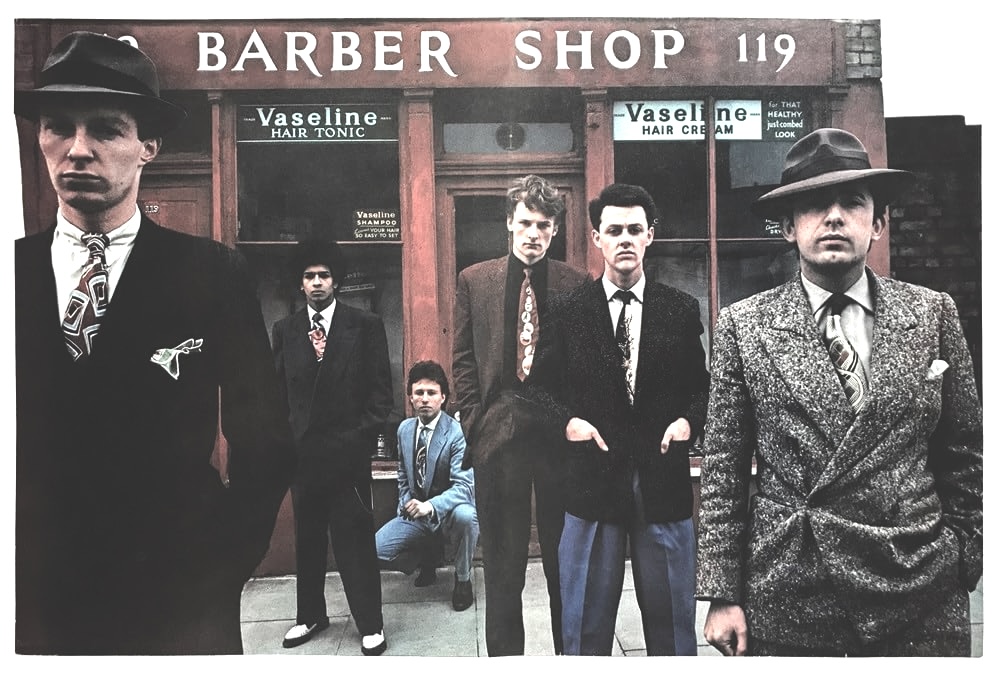 Interview with Phil Strongman by Jay Strongman on Phil’s new book ‘ACME BOY – The Birth Of Punk & Anti-Fashion’


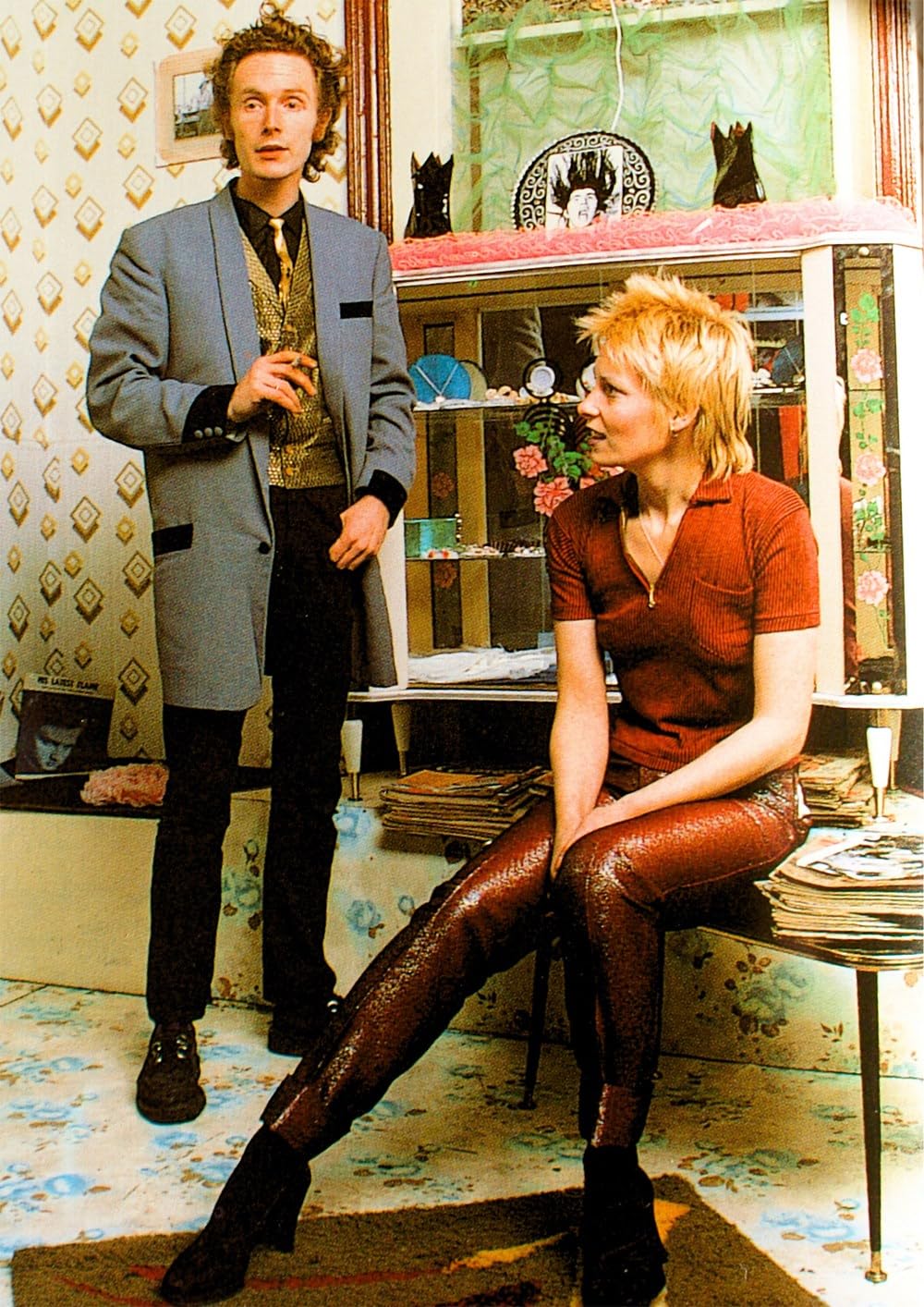
When I first took my kid brother Phil down to Chelsea’s Acme Attractions in the King’s Road, in the late summer of 1975, I had no idea that he’d be designing clothes for them a year later. Nor that I would be, for a time, the manager of the follow-up shop BOY (now the brand known as BOY LONDON). In ’75 Phil was still in school and I had just left school and, for both of us, Acme was part of a semi-secret society – a society that only started to go overground in the last half of 1976 as the Sex Pistols, Banshees and The Clash exploded across the front pages of the music press… and then the national press. Although Acme’s future customers were to include everyone from Bob Marley to Nick Lowe – to Joe Strummer to Sid Vicious to Peter O’Toole – within a couple of years it was half-forgotten, and by the 1980s some would say it was a totally faded memory, even in its former King’s Road location. So, on a strangely clear line to London, I asked Phil a few questions about how, and why, he’d finally written an in-depth book about Acme and the early days of BOY.
01. Why a book about Acme Attractions and BOY?
Well, there’s been quite a few books about Westwood and McLaren and their shop at 430 King’s Road, Chelsea, how it helped launch the punk look and the Sex Pistols etc. But if SEX / Seditionaries was the Big One – The Beatles, if you like – then Acme Attractions was the alternative – the Rolling Stones, say – the big rivals to SEX for over two years. Acme was part of that story and connected with helping push other musical bands of some influence – Chelsea, Generation X, Billy Idol, The Damned, Throbbing Gristle etc… and there’d been no Acme book. I know Don Letts and Jeannette Lee did an Acme booklet some six or seven years ago but it is just that; a booklet – or pamphlet. It’s only 28 or 30 pages, and that includes photos. A lot had to be missed out to fit it into such a small format. And then there’s the start of BOY which was quite interesting. Bizarre things happened – it’s not every design/fashion book that features bootlegging, new musical genres and tank attacks.

02. But why write it now?
Ninety-nine percent of it was actually written well over a year ago – getting books published is still a super-slow business – but the main prompt was John Krivine agreeing to do a series of interviews. He was the founder of Acme, the co-founder of BOY, and he and the late Steph Raynor were the guys who first employed me there as a teenage designer. So I then ended up in a hotel at the edge of a desert, talking with John for hours and finding out loads of things I hadn’t known before. And, of course, this year is the 50th anniversary of the birth of UK Punk and both Acme and Boy were important parts of that scene.
03. What’s the difference between street fashion then and now?
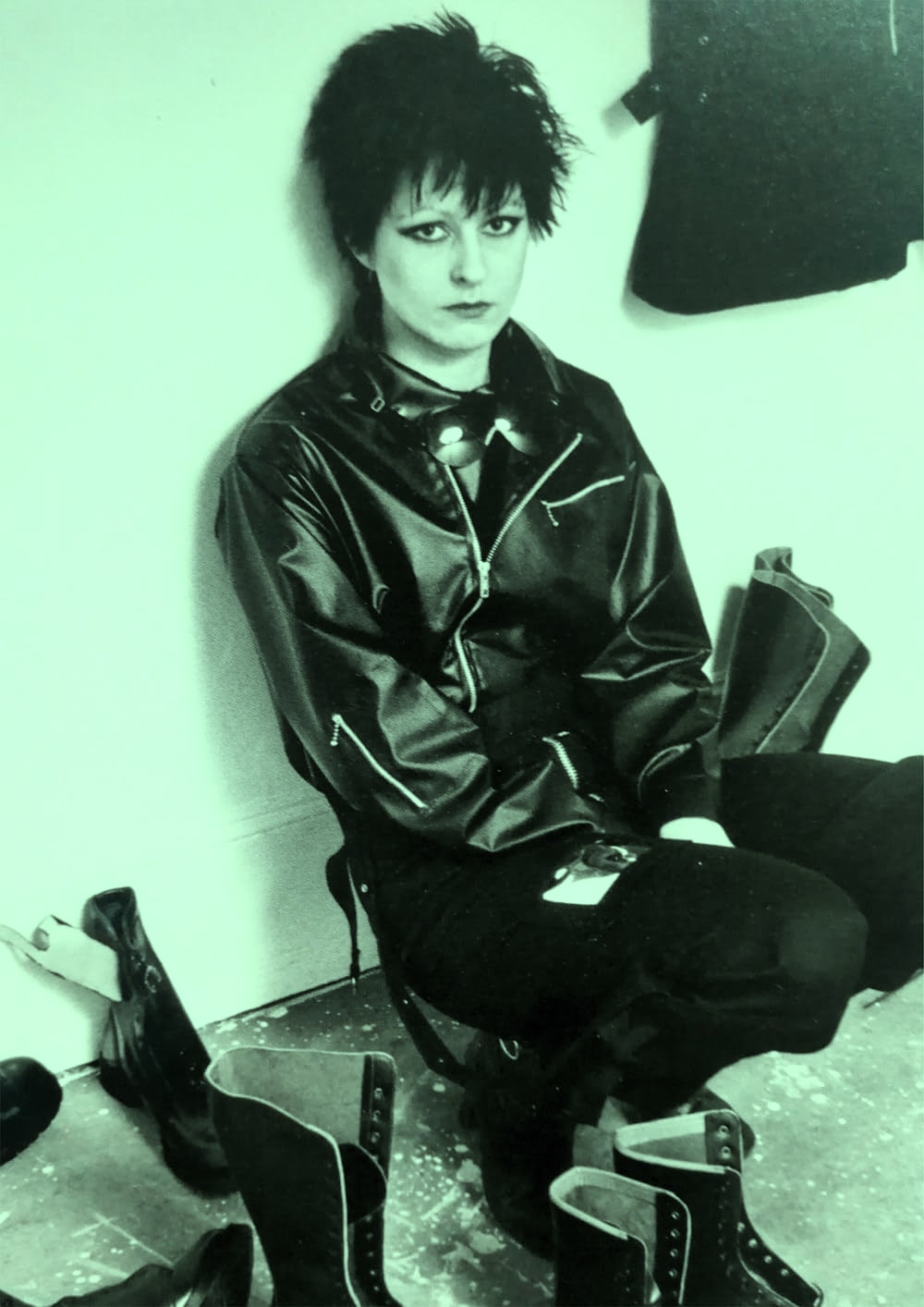
Then, and right up til the late 1990s, trendies and art students customized their clothes, added stuff, painted things, dyed them. Now they just copy a look they’ve seen online. Back then, it was different – when you and I first went looking for Acme it took hours to find it. It was literally underground, you had to make an effort to track it down – and it led to big changes. Whenever I see a fashion exhibition about the changes since the year 2000 it all looks the same to me… although people do say, ‘Oh no no, those trainers in 2003 were this colour white – and in 2009 they were off-colour cream white…’ You need a magnifying glass to see the difference. Who knows? Who cares?
04. Manager Don Letts – who’s now at BBC Radio 6 – and assistant Jeannette Lee – now the Rough Trade CEO – were the stars of Acme, and early BOY, did you get along with them?
Yeah, I think so. They were a little older – I was sixteen when I first went in – but we got on. Jeannette called me Phil the Mod because I had all these R&B, Bluebeat and Soul singles – and because I was always chatting to Steph about mod, he’d been a leading light in the 1960s and seen all the groups, bought all the clothes and was an ace Face. I also had a couple of Vespa scooters and the one you helped me repaint Miami Blue, I sold to Acme for fifty quid and a couple of peg pants. So I took the engine out and they installed it in the middle of the shop.
05. What were the clothing items that stand out for you at Acme and BOY?
Before I joined the design team – which was basically me, Steph and Helen Robinson – Acme were doing some fun-fur jumpers with big see-thru plastic panels across the chest. They looked very striking on girls – though I only ever saw one girl wearing one – especially when worn with our PVC jeans with see-thru yokes at the back. And there were also the pull-on shirts with elasticated waists, made with striped Wemblex fabric. And some black shirts made with a rubber-style fabric and bike jacket zips, crossover. When I joined we did the strap parachute shirts which looked good plus a load of slash-neck t-shirts in cire with chains, mesh etc. The red and black red mini-skirts were pretty slick for the time. But, in number terms, it was all small-time really, quite underground – there were only a few dozen of each of these items ever made, sometimes less – most of the stuff that really sold well at Acme were the pegs, the pointed shoes and the old stock Wemblex shirts. Of the BOY stuff I think some of the subsequent t-shirts were pretty strong. Riot, Join the Professionals etc. I remember us doing a couple of samples together there – Philip Salon had gone by then, he’d been the grudging sample machinist at one point – but they weren’t manufactured. Loads of drawings and samples looked good but weren’t made up at all. Making stuff was always a problem for Acme and BOY.
06. What’s your best memory of Acme / BOY?
Hearing Augustus Pablo’s ‘King Tubby Meets The Rockers Uptown’ on the Acme sound system a few minutes before Jonathan Richman’s ‘Roadrunner’ came blasting out. On the wall there were 1950’s fleck jackets and new Sta-Prest – well, they were new to me – and there were also some cool-looking people in the shop and lots of talk of new music and new music groups. We’d rehashed the past and something new and innovative was clearly starting to come through. We’d missed the 1960s party but now we were making our own.

07. What’s your worst memory of Acme or BOY?
When a huge gang of Teddy Boys attacked people outside BOY, spring ’77 – and then they attacked the shop. I go into it in detail in the book because, for quite a few moments, it was life and death stuff, and only my second experience of such violence.
08. What was the big difference between SEX and Acme?
Acme was still cool but it was also friendlier. It was interactive – there were sometimes notices and stuff pinned-up. And I felt that I could design for them, and I did. SEX was a closed shop. ‘We know it all’. Some of the clothes were brilliant, though some got increasingly gross as it became Seditionaries, but it was generally a bit depressing for an aspiring designer like me. And a bit scarey for girls too. I knew girls, daring girls, who would go to parties and night-clubs wearing just underwear and a see-thru mac – but they just would not go into SEX. The barbed wire, the porno quotes on the wall, the rubber masks… it was all too threatening for them. Cost-wise too there was a difference with 430 King’s Road – Acme’s peg trousers were £10 and then £12, in SEX they were £20. A big difference, £20 is around £200 now.
09. Did you often see Malcolm McLaren and Vivienne Westwood in 430 King’s Road?
In 1976 I only saw Malcolm in SEX twice. The first time he didn’t recognise me from the Pistols’ gigs and so gave me the whole salesman bit about the cire t-shirts being especially made and ‘being great value for money’. The second time he recognised me and so we talked a bit about the Pistols who were still playing the 100 Club at that point – he was much more fun then, and he was always funny But after the Pistols got signed to EMI in early October ’76 I never saw him in the shop again, ever – I just used to see him at the Glitterbest office.But Vivienne was in SEX and then Seditionaries at least two or three times a week, right up until the very end.
10. Would you say those teams – McLaren-Westwood, Krivine-Raynor – were artists?
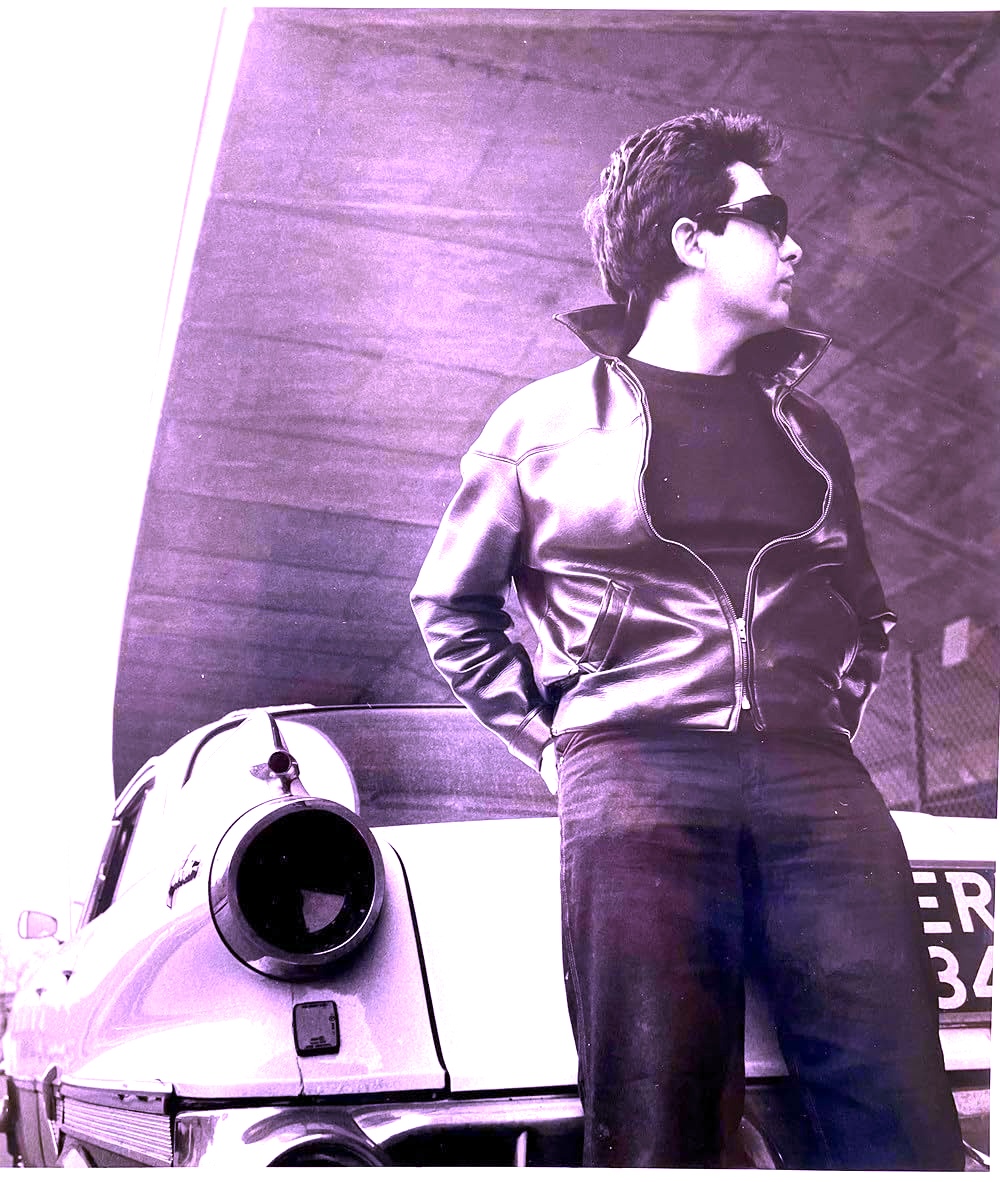
Oh, Malc was for sure – as was Viv at times. They saw things in those terms, revolutionary art. The first dozen Anarchy shirts they did, Malc insisted on hand-painting some of the stripes on. He’d always wanted to be a fine artist but life got in the way. In a way he’s as important as people like Picasso and Warhol. Steph and John, on the other hand, were talented nostalgia hustlers who became street fashion leaders by accident – and then gave a platform to young designers and creatives. Again, almost by accident… although I have to say, with their jukeboxes, classic cars and clothes, they were incredibly stylish people. Steph’s life was his art, though it got a bit messy after the Acme highpoint, as things often do.
11. Are you surprised that BOY London has lasted and is still sometimes worn by celebs like Rihanna, Madonna, Charli xcx?
Not really surprised, no. It had close to 20 stores worldwide at one point but then most of them went – I don’t think there’s a single BOY store anywhere now, they just have small corners of other people’s shops. I think it could have been handled a lot better but John left the biz in 1985 and Steph wasn’t really a dedicated designer or a serious businessman – a character, with real charisma, but not a planner. He was always ahead of the game – his PX store kinda launched the Blitz / New Romantic thing – but he couldn’t really plan ahead. Money isn’t everything, of course, but in business terms, Vivienne Westwood Ltd was worth £90 million when she died a few years ago. Which is about a hundred times more than Steph was worth when he passed in 2021. John K is still with us, thank God, sitting by his swimming pool in the desert.
12. What do you hope your book ultimately does?
I hope it ultimately sells! Sorry, I had to say that. No, seriously, I hope it gets older people remembering and reliving those times, they were creative, hopeful times – and I’d like to think it might just get some young people away from the boring dogma of ‘now ideas’ and ‘now fashion’. It’s depressing that so many people, 18-30, get all their ideas about style, about fashion, about the world and even politics from sloppy sources such as CNN, Sky or the BBC. They’re all a bit too bland and woke. Or they get ideas from TikTok, which is even worse. And I also hope to remind commentators that people like John Krivine, Steph Raynor and Roger Burton should be remembered – they were something, they were really influential.

Write A Review
Love This?